
Rethinking Hell
Jesus’ Warning, Misread and Reclaimed

We talk about hell as though it were somewhere far away—a fiery underworld, a metaphysical punishment zone, an eternal afterlife reserved for the wicked. But what if the word Jesus used didn’t point to some otherworldly realm at all? What if it referred to a real valley just outside Jerusalem’s walls—a place his listeners could see, smell, and remember with dread?
What if hell was never meant to scare unbelievers into heaven, but to confront the religious and self-assured with the rot that festers when faith turns cruel?
Long before Christianity took shape, human beings wrestled with questions of justice and what happens when we die. Some of the earliest detailed visions of judgment and afterlife appear not in the Hebrew Bible, but in the sacred writings of Zoroastrianism, an ancient Persian religion that deeply influenced Jewish thought during the exilic period.
In Zoroastrian cosmology, existence unfolds as a battle between truth (asha) and the lie (druj). Those who live truthfully cross safely after death over a narrow bridge—the Chinvat Bridge—into the “House of Song,” a realm of light and harmony. Those who live by deceit fall into a chasm of stench and darkness known as Duzakh, a term that later cultures would recognize as “hell.” (One might see this imagery played out in Jesus’ parable of the Rich Man and Lazarus regarding the “chasm that can’t be crossed.”)
This early image was not eternal torture. It was moral consequence: a soul entering the reality it had created. Over time, however, Zoroastrian texts—like the Arda Viraf Nameh—grew more elaborate, describing molten rivers, torments fitted to specific sins, and a future moment when all evil would be purged in fire and even the damned would be restored.
It was, in other words, a vision of judgment and purification. Fire burned away corruption to prepare the world for renewal.
When the exiled Jews of Babylon encountered Persian religion, they met a fully developed theology of cosmic justice. By the Second Temple period, major streams of Jewish thought—the Pharisees, the Essenes of Qumran, and the writers of apocalyptic literature—had adopted ideas of resurrection, postmortem reward and punishment, angelic and demonic forces, and a final reckoning. These motifs parallel themes long present in Zoroastrian cosmology, and even the “magi” in Matthew’s Gospel likely reflect Persian religious influence—yet Israel rooted these ideas in its own soil, tying judgment and hope to its land, its history, and its God.
Just beyond Jerusalem’s southern walls lies a steep ravine called Gai Ben-Hinnom—the Valley of the Son of Hinnom. In ancient Israel, it was notorious. Kings Ahaz and Manasseh sacrificed children there to the god Molech, “passing them through the fire.” The prophets condemned it as an abomination.
Jeremiah declared it would become the Valley of Slaughter—a cursed place where the bodies of the dead would lie unburied. Centuries later, that curse lingered. The valley became associated with refuse, rot, and the city’s garbage fires.
The Hebrew Ge-Hinnom eventually became the Greek Gehenna—literally “the Valley of Hinnom.” When Jesus spoke of Gehenna, he was not invoking a mystical realm beneath the earth. He was pointing to that valley: visible from the city, thick with memory, a place once defiled by violence and idolatry.
To say “the fire of Gehenna” was to invoke a living symbol—a warning that faith gone wrong can burn the world down.
By the time of Jesus, “Gehenna” had become a metaphor in Jewish thought—a shorthand for divine judgment. The rabbis of the Talmud would later teach that the wicked spend twelve months in Gehinnom before emerging purified, while the truly righteous bypass it altogether. In apocalyptic writings like 1 Enoch and 4 Ezra, it becomes a cosmic furnace where God’s justice consumes corruption.
So when Jesus uses the word Gehenna—eleven times in the Gospels—he is drawing from this evolving Jewish vocabulary, not inventing a new doctrine. But what’s remarkable is how he uses it, and to whom.
He doesn’t aim the warning at pagans or atheists.
He aims it at the religious—the scribes, the Pharisees, the teachers of the law.
“You snakes, you brood of vipers! How can you escape the judgment of Gehenna?” (Matthew 23:33)
This is not the language of eternal damnation for outsiders. It’s prophetic indictment—Jeremiah’s curse reborn. Jesus turns the Valley of Hinnom into a mirror held up to the temple establishment, warning them that their pride, hypocrisy, and thirst for control will lead them back to the same valley of ruin their ancestors once desecrated.
The warning was national, ethical, and spiritual:
If you keep sacrificing others on the altar of your own righteousness, Jerusalem itself will become Gehenna.
And it did. Forty years later, Roman legions surrounded the city, and the valley once again filled with fire and corpses.
The metaphor had become reality.
That reversal matters, because it means Jesus’ “hell” speech was never about sending other people to eternal torment. It was about calling us—the faithful, the pious, the insiders—to examine what burns inside our own hearts.
Whenever religion uses fear instead of love, whenever purity becomes cruelty, whenever devotion to God tramples the image of God in another human being—the fires of Gehenna are stoked again.
Modern readers often translate Gehenna as “hell,” importing medieval imagery of demons, pitchforks, and Dante’s inferno. But Jesus’ audience didn’t imagine sulfurous caves or eternal torment. They imagined the smoldering valley at the city’s edge, where sacred history and moral horror collided.
That’s what made his warning sting: he was not talking about some distant afterlife. He was talking about what happens here, when we trade mercy for control, compassion for contempt.
How “Hell” Got Redefined
So how did we get from a local valley to a cosmic furnace?
When Christians today picture hell—lakes of fire, final judgment, cosmic separation—most of those images do not come from Jesus’ teaching in the Gospels. They come from the Book of Revelation, the most thoroughly apocalyptic text in the New Testament.
Revelation is soaked in the same symbolic universe as Daniel, 1 Enoch, and other Second Temple apocalyptic writings—writings born during and after exposure to Persian worldviews. The imagery of final fire, cosmic sorting, and ultimate purification or destruction is deeply at home in that tradition. Revelation lifts those motifs into a Christian key.
Where Jesus spoke of Gehenna as a historical and moral warning,
Revelation projects the apocalyptic drama to its cosmic conclusion:
“Then Death and Hades were thrown into the lake of fire.” (Rev. 20:14)
Notice the structure:
judgment as fire
evil and injustice being consumed
a final purging before renewal
a new heaven and new earth emerging on the other side
That progression mirrors the Zoroastrian eschatological cycle almost exactly:
The world descends into corruption
Fire purifies creation
Evil is eliminated
The world is made new
In later Zoroastrian texts, even the righteous pass through molten fire, which feels to them like warm milk—the same fire that torments the wicked becomes purification, not annihilation. Revelation shares that moral architecture: judgment is not raw vengeance—it is the necessary burning away of what cannot enter new creation.
Revelation does not introduce an entirely new concept but extends the same moral logic Jesus invoked: injustice, exploitation, and violence cannot endure indefinitely. The “lake of fire” imagery functions the same way Gehenna did—as the place where what destroys life is itself destroyed. It is not divine cruelty for its own sake but the necessary elimination of what cannot belong to a renewed world.
In this sense Revelation reinforces the same trajectory rather than contradicting it. The fire exists because resurrection exists. A new creation requires the end of what corrodes creation. Judgment is not the opposite of hope but its precondition. The point is not that God delights in torment; the point is that God refuses to allow injustice to have the last word.
Revelation’s visionary language, written in the style of apocalyptic resistance literature, was meant to give persecuted Christians a way to see history as bending toward justice. But over time, the imaginative language hardened into literal geography.
The fire became a place. The symbol became a map. The metaphor became a doctrine.
And because Revelation became the final word in the canon, its imagery — not Jesus’ usage of Gehenna—became the default Christian imagination of “hell.”
Additionally, as Christianity spread into the Greco-Roman world, its vocabulary shifted. Greek philosophy and Roman imagination gave fixed structure to what had once been largely moral and poetic imagery. Hades and Tartarus from Greek myth were blended with Gehenna and with the apocalyptic fire imagery of Revelation—imagery itself already shaped by the Persian/Zoroastrian pattern of cosmic sorting, final purification, and the destruction of evil. The result was a single, sprawling concept of the underworld that became increasingly abstracted from its geographic and prophetic origins.
By the medieval period, Christian theology had fused these images into a system: heaven above, hell below; eternal bliss versus eternal torment. The moral nuance of Jewish Gehinnom—as purification, consequence, or covenantal warning—was largely lost.
Add to that centuries of artistic imagination—Hieronymus Bosch’s grotesques, Dante’s Inferno, Jonathan Edwards’s sermons—and hell became less about moral reckoning and more about divine retribution. It became a weapon in the hands of the religious, precisely the kind of thing Jesus warned about.
Stand in Jerusalem today and you can still see the Valley of Hinnom. It’s green now—terraced gardens, hiking trails, trees whispering over the ruins. But history clings to the soil. When I visited several years ago, I wondered if that’s what Jesus saw: a place once cursed, capable of becoming a place of renewal.
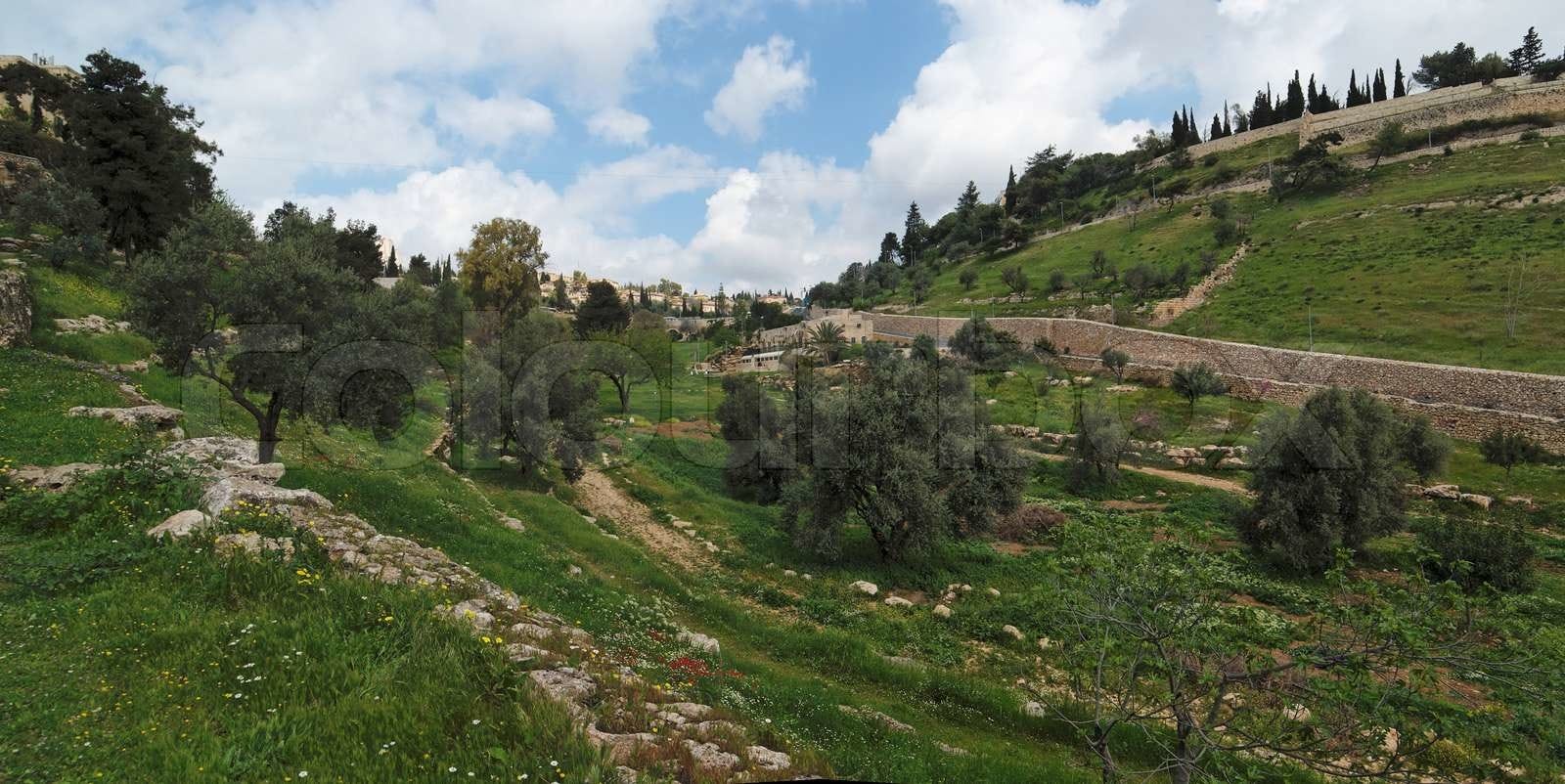
Maybe that’s the deeper truth buried in the name Gehenna. God’s fire, though destructive, is also refining. The valley is where judgment and mercy meet. Perhaps that is the truest meaning of Gehenna—not endless punishment, but transformation through fire. The valley becomes a garden. The place of horror becomes a place of hope.
When Jesus invoked Gehenna, he wasn’t saying, “I’m sending you to eternal torture.” He was saying, “Look—this is where hypocrisy leads. This is what self-righteous religion does to the world. Don’t let this valley be your story.”
Hell, in that sense, is not God’s desire for us but the natural consequence of what happens when love dies.
Every age builds its own Gehenna: concentration camps, slums, war zones, polluted rivers, and prisons overflowing with the poor. Every time we look away from the suffering of others, the valley burns again.
Recovering the Original Warning
If the church reclaimed Jesus’ original use of Gehenna, it would force us to stop using fear as a tool of control and return to the truth that judgment begins not with them, but with us. It would shift the question from “Who goes to hell?” to “Where have we already built hell on earth by the way we live, rule, consume, legislate, exclude, and justify harm in God’s name?” It would mean preaching judgment not as the pleasure of watching others burn, but as the painful honesty of seeing what in us must be burned away for anything like the kingdom of God to exist.
It would mean recognizing that divine fire in Scripture is not primarily a torture chamber but a refining furnace—that purification and punishment are not the same thing, and that God’s justice is aimed not at annihilation but at making wrong things right. Hell, in Jesus’ mouth, is not proof that God is cruel; it is proof that God refuses to baptize our cruelty and call it holy.
Jesus did not come to make us safe for the afterlife. He came to make us dangerous to injustice now. He came to collapse the distance between heaven and earth, to drag the future into the present, to ignite a different kind of fire—one that burns away indifference, fear, self-righteousness, and every system that treats people as disposable. He did not stand at the edge of history pointing to an escape hatch; he walked straight into the world’s Gehenna and rose again to say that even the valley of slaughter is not beyond redemption.
Because the opposite of hell is not heaven. The opposite of hell is love enacted—compassion with a spine, mercy that refuses to look away, justice that will not wait for the afterlife to begin. Resurrection is God’s refusal to let Gehenna be the last word over the world or over us.
Compassion is the only fire that does not destroy. It is the only fire hell cannot extinguish. And it is the fire Jesus left burning in our hands—and hearts.
Thank you for this. I rejected the concept of hell I learned growing up in the southern bible belt a long time ago. It didn't reflect what I knew about Jesus in my heart. This does 💖